
Options in online marketing: SEO and more
1. Introduction: The Importance of Online Marketing
In today's digital world, online marketing is not just an optional part of a successful business strategy — it is virtually a prerequisite. Where print advertising and traditional media were once the first choice, the internet now dominates as the most important marketing channel. Online marketing offers companies of every size numerous advantages that traditional marketing formats often cannot match, and it lays the foundation for long-term success.
International reach
The internet makes it possible to reach a global audience — something that would be difficult or expensive with traditional marketing methods. Products and services can be promoted worldwide without geographical limits.
Location independence and flexibility
All you need to manage and optimize marketing campaigns is internet access. Whether on a smartphone while on the move or on a PC in the home office, the internet makes flexible work possible.
Targeted outreach
With precise data analysis and dedicated tools, target groups can be defined and addressed accurately. This dramatically reduces wasted reach and increases the efficiency of marketing measures.
Cost efficiency
While print ads, TV spots and billboards often require large investments, online campaigns can be flexibly adapted to any budget. This is especially valuable for startups and smaller companies.
2. Search Engine Optimization (SEO): The key to visibility
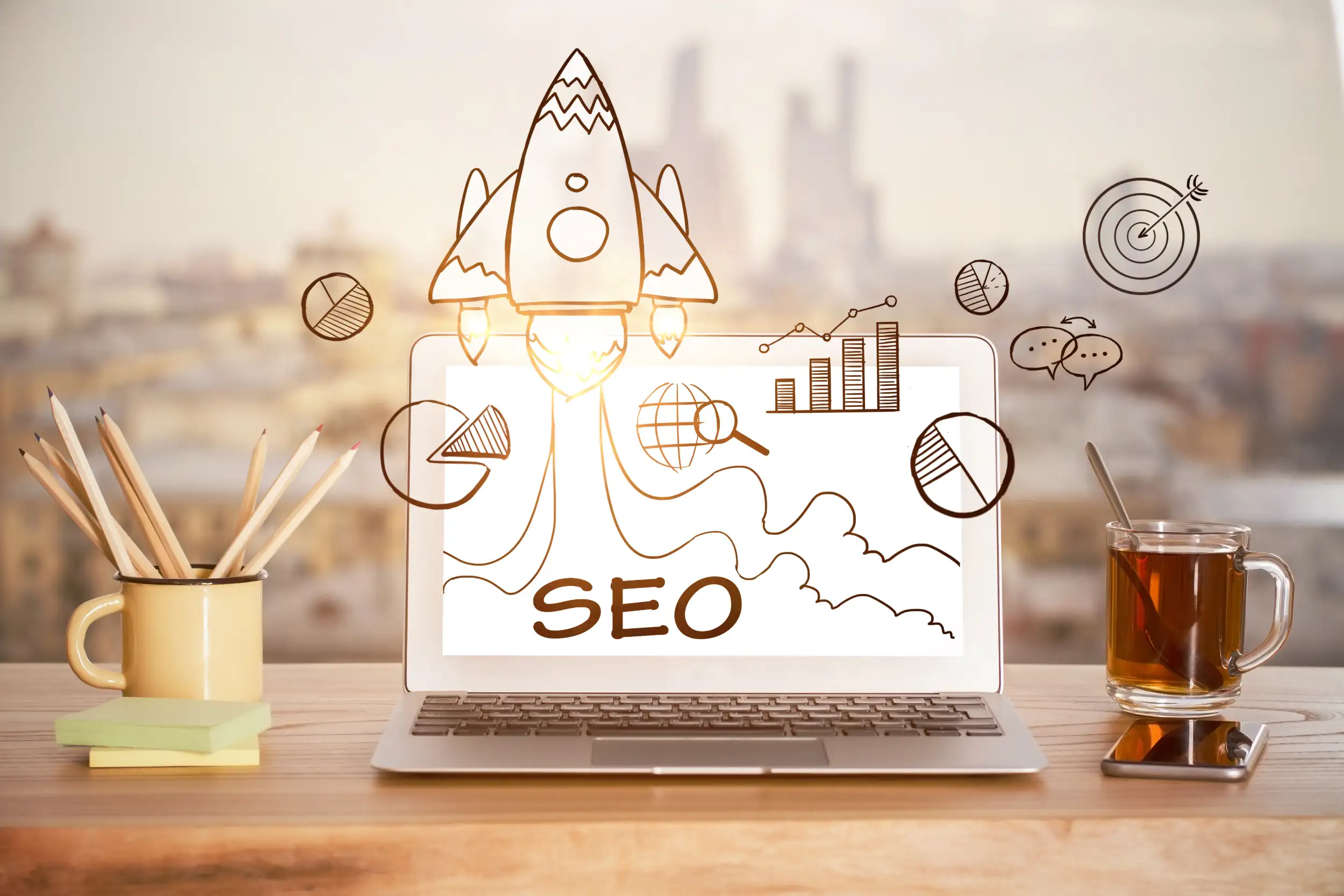
Search engine optimization (SEO) is at the heart of online marketing. The goal is to increase the visibility and discoverability of a website in the results of search engines such as Google. SEO is a long-term strategy aimed at driving organic traffic to the site and ultimately expanding the customer base.
The two pillars of SEO: on-page and off-page optimization
SEO can be divided into two main areas: on-page and off-page optimization. Both play a central role in the visibility of a website and are indispensable parts of every successful SEO strategy.
On-page SEO
On-page optimization refers to all measures carried out directly on the website. These include keyword research and integration, improving content, and technical optimization to enhance load times and user experience.
- Keyword optimization: Every topic should contain a main keyword and several secondary keywords that appear often enough but not excessively in the text.
- Structured content: Headings, paragraphs and bullet points help search engines and users easily grasp the content.
- Multimedia elements: Images, videos and infographics make content more attractive and can increase time on page, which has a positive impact on rankings.
Off-page SEO
Off-page optimization focuses on measures outside your own website, such as building backlinks on external sites. A strong backlink profile signals trust and relevance to search engines. A successful off-page strategy includes building partnerships and publishing guest posts to strengthen the brand's reach and reputation.
Technical SEO
Alongside the well-known on-page and off-page aspects, technical SEO is an often neglected but essential pillar. Technical SEO covers all measures that ensure a website can be optimally "read" by search engines. These include:
- Sitemaps and indexing: An XML sitemap helps search engines understand the structure and page hierarchy of the website.
- Mobile optimization: As more and more people access the internet via mobile devices, Google prefers mobile-optimized pages.
- Load time: A fast load time not only improves rankings, but also user experience.
The benefits of a high SEO ranking
A strong ranking in search results can be a source of long-term, organic traffic without incurring additional advertising costs. This has numerous advantages:
- Higher click-through rate (CTR): Pages that appear among the top results enjoy a significantly higher click-through rate.
- Cost efficiency: Unlike paid advertising such as Google Ads, organic traffic does not generate any per-click costs.
- Building trust: Users often trust organic results more than ads, which can lead to stronger customer loyalty.
3. Google Ads: Paid search advertising
Alongside SEO, which relies on organic visibility, Google Ads offers a way to quickly increase a website's visibility through paid ads. These ads usually appear above the organic search results and are billed per click.
Advantages and disadvantages of Google Ads
- Advantage: Google Ads provides immediate visibility and the ability to target potential customers in a focused way.
- Disadvantage: Google Ads costs can vary widely depending on competition and keyword, and often range from €0.40 to €12.00 per click. There is also the risk of click fraud.
Despite the drawbacks, Google Ads can be a sensible addition to an SEO strategy — especially in highly competitive industries or when short-term results are needed.
4. Social Media Marketing: A direct line to your audience
Today, social media is an indispensable part of any comprehensive marketing strategy. Platforms such as Facebook, Instagram, Twitter and LinkedIn make it possible to connect with billions of users worldwide and build strong brand loyalty.
Advantages of social media marketing
- Direct interaction: Companies can communicate directly with their target audience and respond to questions or concerns. This creates closeness and trust.
- Targeted advertising: Social media platforms offer detailed targeting options for the precise placement of ads.
- Content marketing and storytelling: Social media is ideally suited for visual content and storytelling.
The growing influence of influencer marketing

Influencer marketing is a growing trend within social media marketing. Companies partner with individuals who have substantial reach and influence on social platforms. These influencers can have a positive impact on brand image and help reach a large target audience.
5. Content Marketing: The core of every successful strategy
High-quality content is the foundation for SEO, social media and overall brand communication. Content marketing is about creating valuable and relevant content that attracts potential customers and retains them over the long term.
The role of content in SEO
Content and SEO work hand in hand. Search engines analyze the content of websites to understand how relevant they are for specific queries. That is why content should appeal not only to users but also meet SEO criteria.
- Keyword research and optimization: Content should be aligned with relevant keywords that appear often enough but not excessively.
- Structure and formatting: A well-structured text with headings, paragraphs and bullet points makes it easier for search engines to "understand" the content.
- Use of multimedia: Images, videos and infographics improve user experience and reduce bounce rates, which can have a positive effect on rankings.
6. Email Marketing: A direct and personal channel
Compared to dynamic channels like SEO and social media, email marketing is a proven method that is often underestimated. Yet it enables direct and regular communication with your target audience and is one of the most effective ways to strengthen customer loyalty and grow revenue.
- Personalization: By segmenting the email list, each group can receive tailor-made content and offers, significantly boosting conversion rates.
- Cost efficient: Email marketing is inexpensive and suitable for companies of any size.
- Automation: Many email tools offer automation options for sending welcome emails, birthday messages or reminders without any manual effort.
7. Affiliate Marketing: Win-win partnerships
Affiliate marketing is another way to expand reach and grow revenue. Partners (affiliates) receive a commission for every successful referral that leads to a purchase or another desired action. This form of marketing is especially well suited to e-commerce companies.
- Extended reach: Through cooperation with affiliate partners, companies can reach new customer groups.
- Performance-based model: Because affiliates are only paid when they deliver results, this method is cost efficient and low risk.
- Trusted recommendations: Since affiliates are often perceived as trustworthy sources, they can strengthen brand image and increase purchase intent in the target audience.
8. Conclusion: The right combination makes the difference
Online marketing is a dynamic field that offers companies a wide range of opportunities. While SEO ensures long-term visibility, Google Ads can deliver fast results in the short term. Social media enables direct interaction with the target audience, and email marketing supports the development of a loyal customer base.
For companies it is essential to choose a combination of these channels that fits their audience and specific business goals. A holistic approach that ties SEO, social media and content marketing together creates a solid foundation for sustainable growth and a strong market presence.