Inhaltsverzeichnis
- 1. Warum die Zielgruppe ZUERST kommen muss
- 2. Bestehendes Business vs. neue Geschäftsidee
- 3. Die wichtigsten Fragen zur Zielgruppen-Definition
- 4. Beispiel: So sieht eine fertige Persona aus
- 5. Tools und Methoden zur Zielgruppenanalyse
- 6. ChatGPT-Prompts zum Kopieren
- 7. Zielgruppe validieren und anpassen
- 8. Typische Fehler vermeiden
- 9. Mit Business Start Software zur Zielgruppe
Video: Die richtige Zielgruppe finden
Hier wird das YouTube-Video von Tobias eingebunden
You have a great business idea. You are motivated to get started. But wait — have you already thought about who your customer actually is?
The target audience is the foundation of every successful business. Without it, you do not know where to advertise, how to communicate or what your customers really need.
1. Why the target audience must come FIRST
Many founders make the mistake of first developing their product and then looking for customers. That is the wrong way.
The biggest founder mistake
"I'll build the product first and find customers later." This sentence has driven countless startups into the ground. Flip it around: first find your target audience, then develop the matching product.
What happens without a clear target audience?
- You throw your advertising budget out the window
- Your message reaches no one
- You build features nobody needs
- You price wrong — too high or too low
- You lose time with the wrong customers
Key takeaway
"If you try to reach everyone, you reach no one." The more precisely you know your target audience, the more successful your marketing will be.
Sobald du weißt, WER deine Zielgruppe ist, brauchst du die zweite Zahl: WIE VIELE es sind und wie viel Umsatz realistisch drin ist. Das ist genau der Rechenweg im Ratgeber Marktpotenzial berechnen — mit Formel und Beispiel für TAM/SAM/SOM.
2. Existing business vs. new business idea
How you approach the target-audience analysis depends on whether you are optimizing an existing business or starting completely from scratch.

Existing business
Advantage: You already have customers and data.
- Analyze your best customers
- Evaluate sales data
- Run customer surveys
- Use Google Analytics
New business idea
Challenge: No empirical values available.
- Conduct market research
- Analyze competitors
- Formulate hypotheses
- Run tests
With a completely new idea — for example an innovative app — you have to formulate and test hypotheses. Your first assumption probably won't be perfect. That's normal. The important thing is to stay flexible and adjust your target audience as you gain new insights.
3. The most important questions for defining your target audience
To define your target audience, you have to ask the right questions. Here is your checklist:
Demographic questions
- Age: How old is your target audience? (e.g., 25–35 years)
- Gender: Are you addressing more men, women, or everyone?
- Income: What can your target audience afford?
- Education: What level of education do your customers have?
- Location: Local, regional, national or international?
Behavioral questions
- Channels: On which platforms is your target audience active?
- Buying behavior: Do they buy online or offline?
- Information search: How do they inform themselves before buying?
- Problems: Which problems do they want to solve?
- Needs: What is really important to them?
Business model questions
| Question | B2B (business customers) | B2C (end consumers) |
|---|---|---|
| Decision-maker | Managing director, purchasing, specialist department | Individual or family |
| Buying process | Longer, multiple contacts | Faster, emotional |
| Budget | Higher, but approval needed | Lower, more spontaneous |
| Communication | LinkedIn, email, trade fairs | Social media, Google, influencers |
4. Example: what a finished persona looks like
A persona is a fictional representative of your target audience. It makes abstract data tangible and helps you really understand your customers.
Example persona: "Marketing-Miriam"
Name: Miriam Schneider
Age: 34 years old
Job: Marketing manager at an SME
Income: €55,000–65,000 per year
Location: Large city (Hamburg)
Channels: LinkedIn, Instagram, podcasts
Goals: Advance her career, find more efficient tools
Problems: Too little time, too many tools, no clear strategy
Buying behavior: Researches thoroughly, reads reviews, needs proof of ROI
Her typical thought: "I need a solution that saves me time and that I can sell to my boss with concrete numbers."
Why this persona works:
- Concrete: You know exactly who you are talking to
- Action-oriented: You know her problems and can offer solutions
- Marketing-relevant: You know where to reach her (LinkedIn, not TikTok)
- Measurable: You can check whether your customers match this profile
Pro tip: Create 2–3 personas
Most businesses have several target-audience segments. Create a separate persona for each one. But not more than three — otherwise you lose focus.
5. Tools and methods for target audience analysis
You don't need to reinvent the wheel. There are excellent tools that help you analyse your target audience.
ChatGPT for initial research
Use AI to develop first hypotheses. Ask for typical customer profiles for your industry, pain points of your audience or trends in your market.
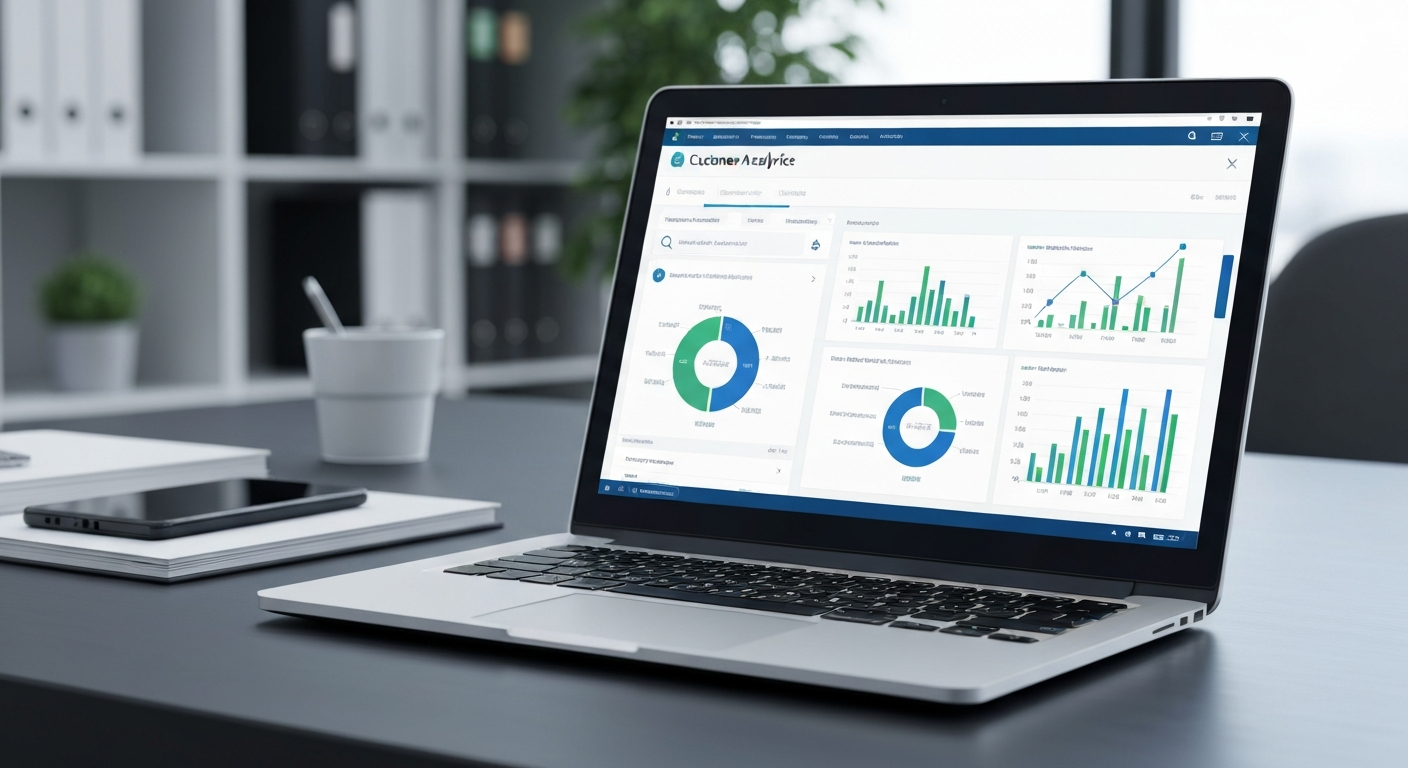
Business Start Software – Market research
With the Business Start Software you create a professional market research report. The AI helps you analyse your target audience systematically.
Google Trends and keywords
Analyse what your potential audience is searching for. Which terms do they use? Which questions do they ask? This gives you valuable insights.
Social media analysis
Look at where your audience is active. Facebook, Instagram, TikTok, LinkedIn? Each platform has its own demographics.
Competitor analysis
Who are your competitors' customers? Which audience do they address? You can learn a lot by observing what works.
6. ChatGPT prompts to copy
AI tools like ChatGPT can help you understand your audience faster. Here are tested prompts you can use right away:
Prompt 1: Identify the target audience
Ich möchte ein Business gründen im Bereich [DEINE BRANCHE]. Hilf mir, meine ideale Zielgruppe zu identifizieren. Erstelle eine detaillierte Analyse mit: 1. Demografische Merkmale (Alter, Geschlecht, Einkommen, Bildung) 2. Psychografische Merkmale (Werte, Interessen, Lebensstil) 3. Kaufverhalten und Entscheidungsprozess 4. Hauptprobleme und Schmerzpunkte 5. Wo ich diese Zielgruppe online finde Sei konkret und gib Beispiele.
Prompt 2: Create a persona
Erstelle eine detaillierte Buyer Persona für [DEIN PRODUKT/SERVICE]. Die Persona sollte enthalten: - Fiktiver Name und Alter - Beruf und Einkommen - Familienstand und Wohnsituation - Tagesablauf - Größte Probleme und Frustrationen - Ziele und Wünsche - Wo sie Informationen sucht - Typische Einwände beim Kauf - Ein direktes Zitat, das ihre Denkweise zeigt Mach die Persona so real wie möglich.
Prompt 3: Analyse competitors' audiences
Analysiere die Zielgruppen dieser Wettbewerber in meiner Branche: [WETTBEWERBER 1], [WETTBEWERBER 2], [WETTBEWERBER 3] Für jeden Wettbewerber: 1. Welche Zielgruppe sprechen sie an? 2. Welche Lücken lassen sie offen? 3. Was machen sie gut/schlecht? Am Ende: Welche unterversorgte Nische könnte ich besetzen?
How to use the prompts correctly
1. Replace the placeholders [IN BRACKETS] with your own information.
2. Ask back if the answer is too generic: "Be more specific on point X"
3. Validate the results — AI can make false assumptions.
4. Use the results as a starting point, not as the final truth.
7. Validating and refining your target audience
Your first target-audience definition is a hypothesis. Now you need to test and validate it.
Important to understand
Especially for innovative products or apps, the target audience can shift. Markets change and demand shifts happen. Stay flexible and observe continuously.
How to validate your target audience:
- Run small tests: Run ads for different audiences and compare the results
- Have conversations: Talk to potential customers. Do they understand your offer? Do they need it?
- Test a landing page: Create a simple page and measure the interest
- Run surveys: Use tools like Google Forms or Typeform
- Analyse data: Evaluate who actually buys – not who you think buys

8. Avoiding typical mistakes
We see these mistakes again and again among founders. Avoid them!
Mistake 1: Too broad
"My product is for everyone." – No, it isn't. The broader you define your audience, the fewer people you actually reach.
Mistake 2: Too narrow
If your audience consists of only 100 people, it will be hard to build a profitable business. Find the balance.
Mistake 3: Assumptions instead of facts
"I think my customers want…" – Belief isn't enough. Test your assumptions with real data and conversations.
Mistake 4: Never adjusting
Markets change. Your audience today may not be your audience tomorrow. Stay alert.
9. Reaching your target audience with Business Start Software
Want to analyse your target audience systematically? The Business Start Software guides you through the entire process in a structured way – from the first idea to a finished persona.
How it works:
Enter the business idea
Briefly describe your planned business. The AI automatically analyses suitable audience segments for your industry.
Answer guided questions
The software asks the right questions about demographics, needs and buying behaviour. No important question is forgotten.
Generate the persona
Based on your answers, the AI creates a detailed buyer persona – including a quote and pain points.
Export as PDF
Your target-audience analysis as a professional PDF – perfect for bank meetings, investors or your start-up grant application.
Alle Tools im Überblick:
- Businessplan-Generator: Kompletter Businessplan mit Zielgruppenanalyse
- Finanzplan-Tool: Umsatzprognose basierend auf deiner Zielgruppe
- Liquiditätsrechner: Cashflow-Planung für die ersten 12 Monate
- Marktrecherche-Report: Automatische Analyse deines Marktes
- BWA-Prognose: Betriebswirtschaftliche Auswertung erstellen
Tipp
Je besser du deine Zielgruppe in deinem Businessplan beschreibst, desto überzeugender wirkst du bei Banken, Investoren und dem Arbeitsamt (Gründungszuschuss).